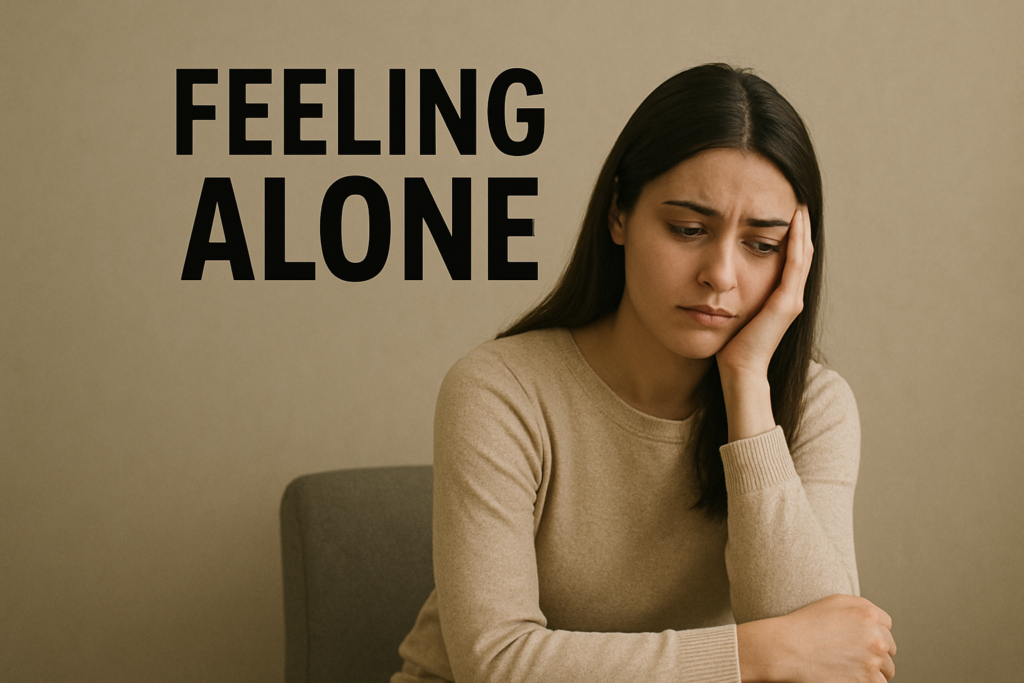
Feeling Alone — 10 Powerful Reasons & Proven Solutions 2026
Are you feeling alone even when people are around you? You are not the only one. Millions of people across India and the world experience this painful weight every single day — silently, without knowing why, and without knowing how to make it stop.
Feeling alone is one of the most common yet most misunderstood emotional experiences of our time. It is not about being physically by yourself. It is the deep, quiet ache of feeling unseen, unheard, and emotionally disconnected — even in a room full of people.
In this guide, we will explore 10 powerful reasons why you might be feeling alone, what it means, how it affects your life, and most importantly — proven solutions that can help you find your way back to connection and belonging.
Table of Contents
1. What Does Feeling Alone Really Mean?
Feeling alone is not the same as being alone. Being alone is a physical state — you are by yourself. Feeling alone is an emotional state — a deep sense of disconnection that can exist even when you are surrounded by friends, family, or colleagues.
This emotional state means that your needs for connection, understanding, and belonging are not being met. It is the gap between the relationships you desire and the relationships you actually have.
Many people describe it as:
- Feeling invisible — like no one truly sees you
- Feeling unheard — like no one listens when you speak
- Feeling misunderstood — like no one gets what you are going through
- Feeling disconnected — like you exist in a separate world from everyone else
According to the World Health Organization, social disconnection and loneliness have reached epidemic levels globally — affecting young and old alike, across every culture and background.
If you are feeling alone right now, know this: your experience is real, it is valid, and it is far more common than you think. You are not imagining it.
2. Feeling Alone vs Feeling Lonely — Is There a Difference?
Many people use feeling alone and feeling lonely interchangeably — and while they are deeply related, there is a subtle but important difference:
😔 Feeling Alone
- Can happen even with others present
- About feeling unseen and unheard
- Often tied to specific relationships
- Can be sudden or situational
💔 Feeling Lonely
- Often about lacking social contact
- About missing connection in general
- Can be chronic over time
- Often persists across situations
Both experiences are painful — and both deserve attention, care, and compassion. Understanding which one you are experiencing can help you take the right steps toward healing.
3. 10 Powerful Reasons Why You Are Feeling Alone
There is always a reason behind feeling alone. Sometimes it is obvious. Often it is hidden beneath the surface. Here are 10 of the most powerful reasons people experience feeling alone:
1. You Have Lost Touch With People Who Mattered
Life moves fast. Jobs change, cities change, relationships drift. One of the most common causes is gradually losing touch with people who once made you feel seen and understood — without building new connections to replace them.
2. You Feel Alone in Your Family
Feeling disconnected from family is one of the most painful forms of loneliness. You can live under the same roof as people who love you and still feel profoundly disconnected — because family relationships sometimes lack emotional depth, open communication, or genuine understanding.
3. Your Relationships Are Superficial
Having many acquaintances but no real friends is a major driver of this feeling. Surface-level conversations and social media interactions can create the illusion of connection without providing the emotional depth that truly satisfies the human need for belonging.
4. You Are Going Through a Major Life Change
Moving to a new city, starting a new job, getting married, having a child, losing someone dear — major life transitions are powerful triggers for this kind of disconnection. They disrupt familiar social networks and force you into unfamiliar emotional territory.
5. You Have Been the Strong One for Too Long
If you are always the listener, the helper, the one who holds everyone else together — you likely feel deeply unseen because no one asks how you are doing. Being the strong one can create deep emotional loneliness, because strength is often mistaken for not needing support.
6. Social Media Is Replacing Real Connection
Scrolling through carefully curated lives on Instagram and WhatsApp groups can intensify feelings of isolation. The constant comparison — seeing others’ highlight reels — creates a silent belief that everyone else has the connection you lack.
7. You Are Afraid to Be Vulnerable
Fear of rejection, fear of being judged, or past experiences of being hurt can make it incredibly hard to open up. This emotional self-protection, while understandable, keeps real connection at arm’s length — deepening isolation over time.
8. You Are Experiencing Depression or Anxiety
Mental health conditions like depression and anxiety often make people withdraw from social contact — and then feel alone and lonely as a result. The painful irony is that withdrawal feels necessary in the moment, yet worsens the very disconnection it was meant to protect against.
9. Nobody Truly Understands What You Are Going Through
Sometimes feeling alone is not about lacking people — it is about lacking people who understand your specific experience. Grief, trauma, illness, failure, or a unique life path can make you feel like you exist in a world others simply cannot access.
10. You Have Stopped Reaching Out
One of the quietest but most powerful reasons for feeling alone is simply that we stop reaching out. Exhaustion, past disappointments, or the belief that others are too busy can cause us to withdraw — and isolation deepens silently over time.
4. How This Affects Your Mind and Body
This experience is not just emotional — it has measurable effects on your mental and physical health. Research published on Psychology Today confirms that chronic isolation can be as harmful to health as smoking.
Mental Health Effects
- Depression — persistent sadness, hopelessness, loss of purpose
- Anxiety — heightened worry, social fear, overthinking
- Low self-worth — believing you are unlovable or unwanted
- Negative thinking — assuming the worst about yourself and others
- Difficulty concentrating — emotional pain occupies mental bandwidth
Physical Health Effects
- Weakened immune system — more frequent illness
- Elevated stress hormones — higher blood pressure and heart rate
- Disrupted sleep — difficulty falling or staying asleep
- Increased risk of cardiovascular disease
- Faster cognitive decline in older adults
This is why addressing this is not just an emotional priority — it is a matter of your long-term health and wellbeing.
5. Feeling Alone in Life — When It Becomes Chronic
There is a difference between occasionally feeling alone and chronically feeling alone in life. Most people experience the former at some point — after a loss, a move, or a difficult period. This is normal and usually temporary.
But when feeling alone becomes persistent — lasting weeks, months, or years — it becomes a chronic condition that deeply affects how you see yourself, how you relate to others, and how you move through the world.
Signs that feeling alone has become chronic include:
- You cannot remember the last time you felt truly connected to someone
- You have stopped expecting relationships to feel meaningful
- You feel like an outsider in every social situation
- You have given up trying to make new connections
- The feeling alone experience is your default emotional state
If this resonates with you, please know — chronic loneliness is not permanent. It is a pattern that can be changed with the right support and the right steps.
6. Feeling Alone Even in a Relationship
One of the most confusing and painful experiences is feeling alone even when you are in a relationship. You have a partner — and yet the emptiness remains. This is more common than most people realise.
Feeling alone in a relationship usually happens because:
- Emotional intimacy has faded over time
- Communication has become surface-level or transactional
- One or both partners have stopped being vulnerable with each other
- Unresolved conflict has created invisible emotional distance
- One partner’s emotional needs are consistently unmet
If you are feeling alone in your relationship, the answer is not necessarily to leave — it is to address the emotional distance directly, through honest conversation and, if needed, couples counselling.
7. Feeling Alone in India — A Growing Reality
India is changing rapidly. As joint families give way to nuclear families, as young people migrate to cities for work, and as digital communication replaces face-to-face interaction — more Indians than ever are feeling alone in ways previous generations never did.
Young Indians between 18-35 are especially vulnerable. Despite being the most digitally connected generation in history, many report feeling alone and deeply disconnected from meaningful relationships. The pressure to succeed professionally, the stigma around emotional vulnerability, and the erosion of community structures all contribute to this growing experience.
Elderly Indians face a different version of feeling alone — as children move away, spouses pass, and social circles shrink. This demographic experiences some of the most severe and medically dangerous forms of social isolation.
Understanding that feeling alone is a shared national experience — not a personal failure — is the first step toward addressing it openly and compassionately.
8. 8 Proven Things to Do Right Now
The experience of feeling alone can feel permanent — but it is not. Here are 8 proven steps you can take right now:
1. Name It Without Shame
Simply saying to yourself — “I am feeling alone right now, and that is okay” — breaks the cycle of shame that makes loneliness worse. Acknowledging feeling alone without judging yourself for it is the foundation of every other step.
2. Reach Out to One Person Today
Not ten people. Not a grand social gesture. Just one message, one call, one person. The antidote to feeling alone begins with one small act of reaching out — even if it feels awkward or uncertain.
3. Prioritise Depth Over Breadth
One deep, honest conversation heals feeling alone far more effectively than ten shallow ones. Choose quality over quantity in your relationships.
4. Join Something Bigger Than Yourself
A class, a volunteer group, a community organisation, a sports team — shared purpose creates natural connection. People who feel feeling alone most struggle not because they lack people — but because they lack shared meaning.
5. Get Off Social Media for a Week
If social media is intensifying your feeling alone experience through comparison and curated illusions, a short digital detox can create surprising relief and space for real-world connection.
6. Speak to a Therapist or Counsellor
If this feeling has persisted for a long time, therapy can be transformative. A trained counsellor helps you understand the root causes and develop lasting tools for connection. In India, iCall by TISS offers affordable, professional mental health support.
7. Practice Being Present With People You Already Have
Sometimes the cure for feeling alone is not finding new people — it is being more genuinely present with the people already in your life. Put down the phone, make eye contact, ask a deeper question.
8. Be Patient and Compassionate With Yourself
Healing from feeling alone takes time. There will be good days and difficult days. Progress is rarely linear. Treat yourself with the same kindness you would offer to someone else who was feeling alone — because you deserve that kindness too.
📖 Related Articles You May Find Helpful:
- Loneliness Meaning — Complete Guide to Understanding It 2026
- Loneliness and Depression — 7 Proven Ways to Break Free
- Social Isolation — 5 Proven Steps to Break Free Today
- Fear of Being Alone — 8 Proven Ways to Overcome It
- Alone and Happy — 10 Powerful Ways to Love Solitude
9. You Are Not Alone in This
If no one has told you this today, hear it now:
What you carry is not proof that you are broken, unlovable, or forgotten. It is proof that you are human — that connection matters to you, that you have a heart that wants to be seen and known.
Millions of people across India — in cities, in villages, in relationships, in offices, in homes — are feeling alone right now in the same quiet way you are. You are not strange for it. You are not weak for struggling with it.
This is not your final destination. It is a chapter — one that can be rewritten with honesty, courage, and the willingness to take one small step toward connection.
Conclusion — This Does Not Have to Be Permanent
Feeling alone is one of the most painful human experiences — but it is also one of the most healable. Understanding the reasons behind it, recognising its effects, and taking small, consistent steps toward genuine connection can transform this experience completely.
You do not need to fix everything at once or build a large social circle overnight. You simply have to begin — with one honest moment, one small step, one choice to let someone in.
At loneliness.co.in, we are here because your pain deserves to be taken seriously. You deserve support, connection, and the knowledge that your experience matters.
You are not invisible. You are not forgotten. You are not alone in feeling alone.
Frequently Asked Questions About Feeling Alone
1. Why am I feeling alone even when I am surrounded by people?
Feeling alone even in a crowd happens because loneliness is emotional, not physical. What you truly need is not just presence, but genuine emotional connection and understanding.
2. Is feeling alone a sign of depression?
Feeling alone can be both a cause and a symptom of depression. Chronic loneliness significantly increases the risk of depression, and depression often makes people withdraw, deepening the sense of isolation. If your feeling alone is accompanied by persistent sadness, loss of interest, or hopelessness, please reach out to a mental health professional.
3. How do I stop feeling alone?
To stop feeling alone, start with one small act of connection — a message, a call, or showing up more genuinely in an existing relationship. Over time, prioritise depth over breadth in relationships, reduce social media comparison, consider therapy if the feeling persists, and most importantly — be compassionate with yourself throughout the process.
4. Why do I feel alone in my family?
Feeling alone in your family is very common and does not mean your family does not love you. It usually happens when family communication lacks emotional depth, when you feel misunderstood or unsupported in your choices, or when family dynamics do not allow for open, vulnerable conversation. Addressing this requires honest communication and sometimes family counselling.
5. Is it normal to feel alone sometimes?
Absolutely yes. Feeling alone occasionally is a completely normal part of the human experience. Everyone goes through periods of disconnection — especially during transitions, losses, or difficult times. It becomes a concern only when this feeling is persistent, intense, and begins to affect your daily functioning and mental health.
6. What is the difference between feeling alone and feeling lonely?
Feeling alone often refers to a specific emotional experience of being unseen or disconnected in a particular situation or relationship. Feeling lonely tends to be broader — a general absence of meaningful social connection. Both are painful, both are valid, and both can be addressed with the right support and self-awareness.
💙 You Don’t Have to Face This Alone
If you are feeling alone and it has become overwhelming, please reach out. Free, confidential support is always available.
📞 KIRAN Mental Health Helpline: 1800-599-0019 (Free | 24/7 | Hindi & English)
📞 iCall (TISS): 9152987821 | 📞 Vandrevala Foundation: 1860-2662-345
Remember: someone out there understands you, cares about you, and wants you to feel happier.
Whenever loneliness feels heavy, return to this guide—or visit https://loneliness.co.in to find a safe place to express yourself.